Yelp
As a design lead for Yelp Business, my focus is on developing the first self-serve ad purchasing flow and experiences. Our aim is to simplify the process of creating and customizing ads for business owners in a seamless, hassle-free way, eliminating the need for sales representatives and delivering value to both consumers and businesses.
In this capacity, my primary responsibilities include collaborating with product managers to identify key challenges, establish product goals and scope, and develop an overall product strategy. I also work closely with stakeholders to gain insights into potential areas for improvement.
As the sole owner of the visual and interaction design aspects, I am responsible for creating and iterating on prototype solutions that meet both user needs and business objectives. My contributions have been instrumental in delivering a more user-friendly and efficient ad purchasing experience for Yelp Business customers.
Winter 2018 — 2019
In Collaboration with Product Manager,
Product Design Manager, Engineers
Product Design, User Research
Time: 2 Month
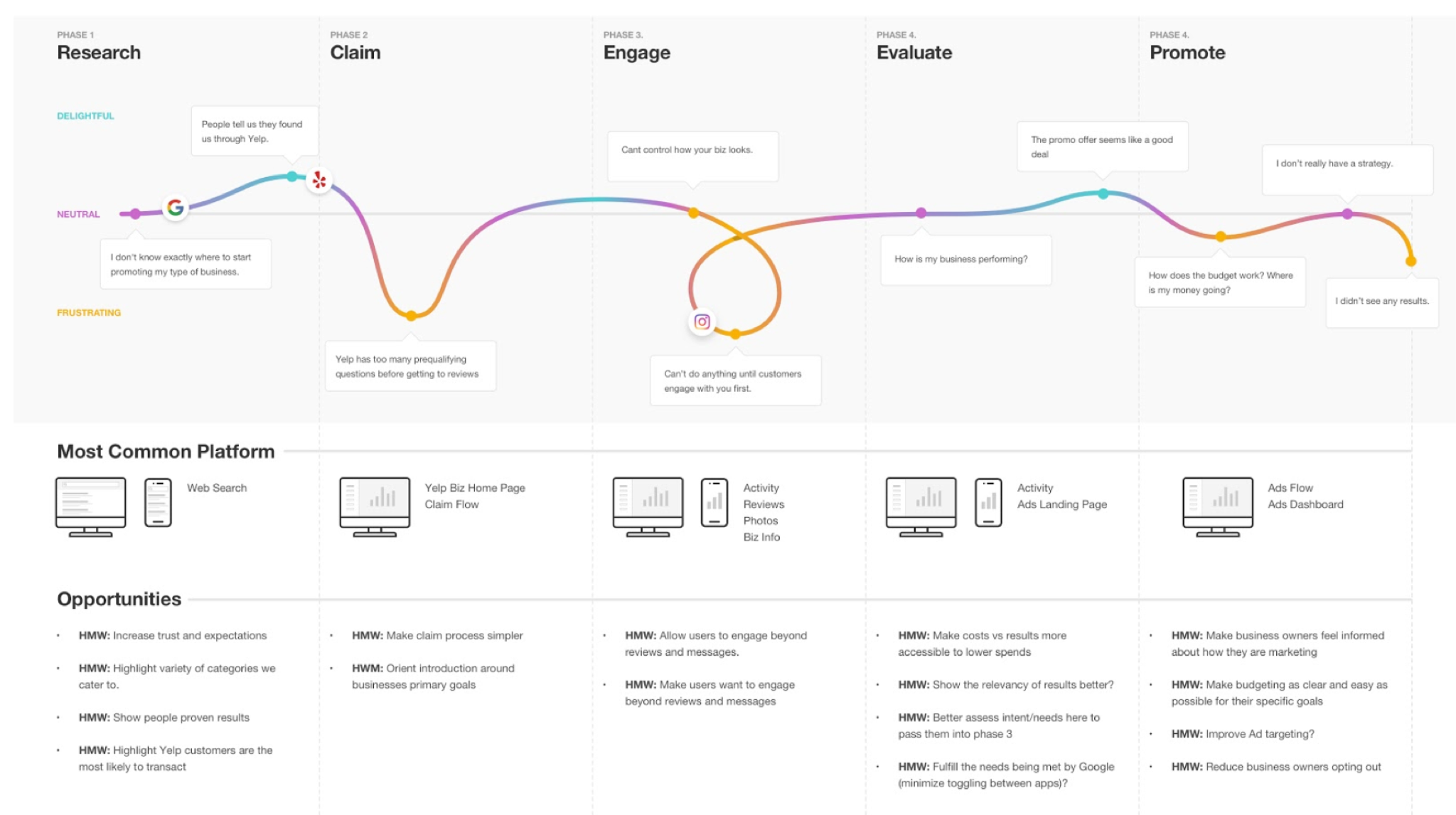
An example of a user journey map with our typical business owner
Overview
n the past, our purchase flow was limited by the need to accommodate a large sales force, making it difficult to implement significant changes. For instance, we adhered to a 3-step flow for purchasing ads. However, we now have the capability to distinguish between pure self-serve users and those who require assistance from a sales representative during the purchasing process.
To improve the efficiency of our design process, I proposed creating a modular and scalable design system that is consistent across all aspects of the product. This would facilitate the work of our engineers in building prototypes and enable product managers, stakeholders, and engineers to easily introduce new features and run multiple experiments.
Goal
Design an exciting purchase flow optimized for pure self serve users
Give users control over their ads by providing them more features
Success metric
Conversion
60-day user retention
Research
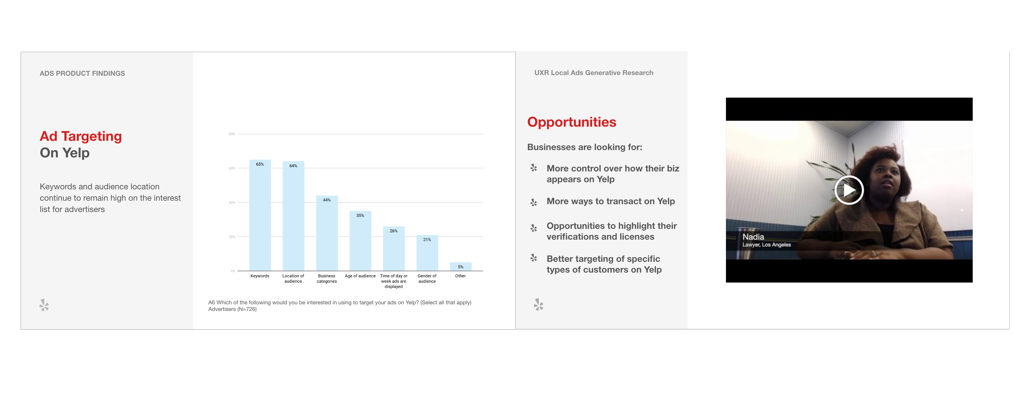
We collaborated with the user research team to conduct comprehensive research, delving into the perceptions and experiences of our business owners, identifying factors that may affect advertiser retention, areas of frustration, and opportunities for improvement. The research team surveyed and conducted in-depth interviews with over 50 Yelp business owners across four cities.
Pain points from findings
• Users feel they do not have control over their ads and business presence on Yelp
• There is a lot of confusion about how Yelp ad product work and what biz owners are purchasing
• Interactions with Yelp sales reps are inconsistent
• Overall distrust of Yelp
We predicted these results are the reasons for our low usage, engagement, awareness, and overall retention. We used these frustrations to list the opportunities of improving the self-serve purchase flow.
Opportunities
• Integrating “customize ads” features into components to provide users more control during the purchase flow — such as targeting capabilities (demographics, keywords, service area)
• Allow business owners to control their ad creative that will highlight their business (photo, reviews)
• Improve our on-boarding copy while bringing in the Yelp brand voice — making the experience more valuable, helpful, informative, trustful, and delightful
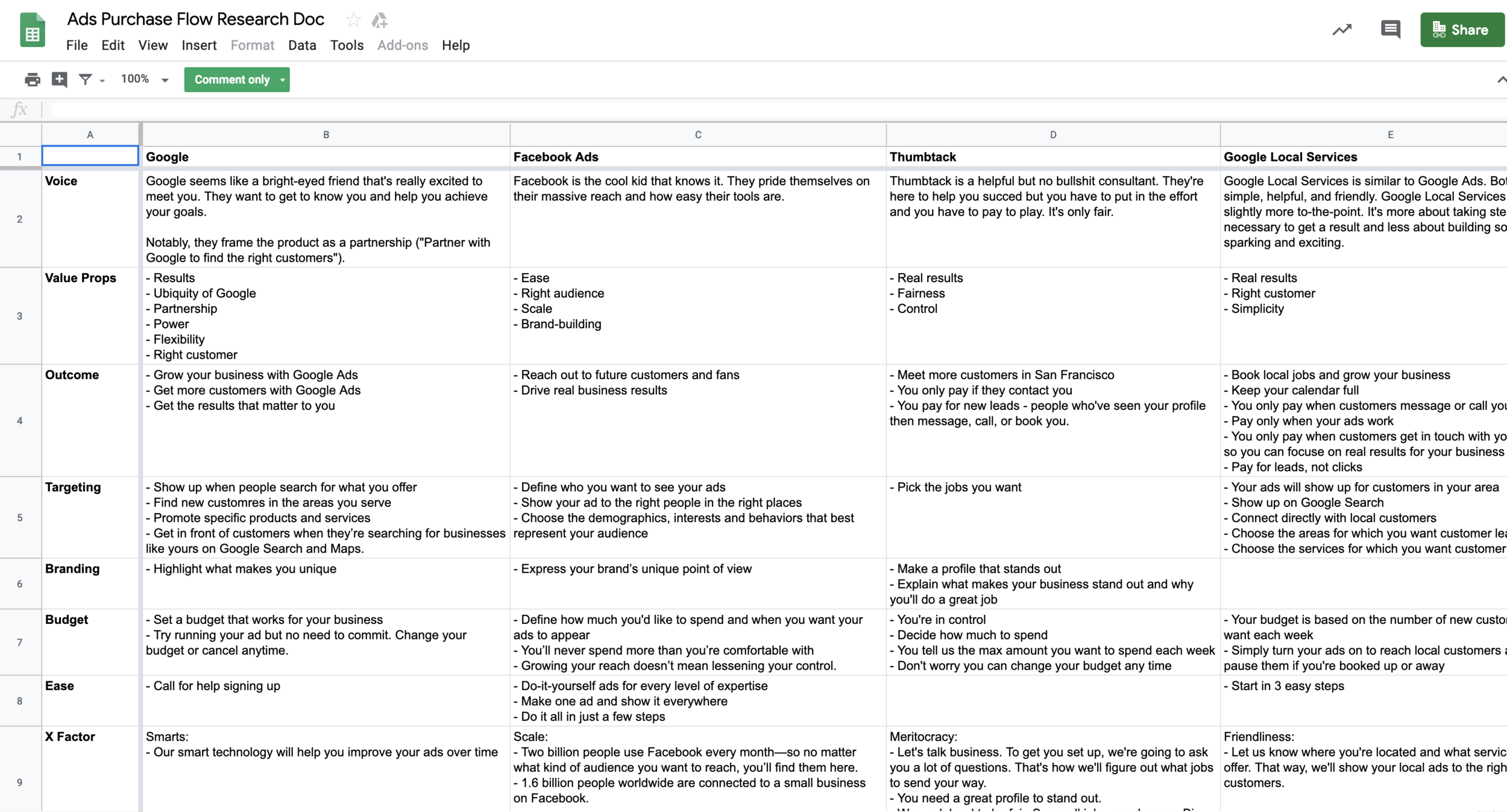
To prioritize our features, we asked data scientists to review which of our “customize ad” features has high usage. We also grabbed data from previous user surveys and thorough competitive analysis. The screenshot below is an example — This included business goals, value props, a list of features, etc.
Status Quo
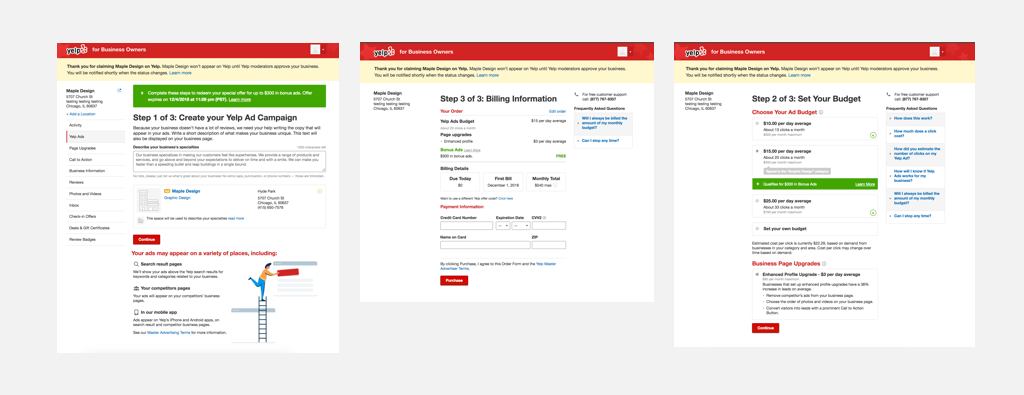
We aim to improve the ad purchasing experience for our users by developing an automated flow that allows self-serve users to easily create and customize their ads with minimal assistance. The current ad purchase flow, consisting of three text-heavy pages, requires significant help from sales reps. The lack of information architecture and excessive content on a single page creates confusion and makes it unclear what the main action item is. Furthermore, the first screen appears to be a marketing page while also providing an option for business owners to write their ad description, leading to ambiguity in the purpose and goals of the page.
Designs
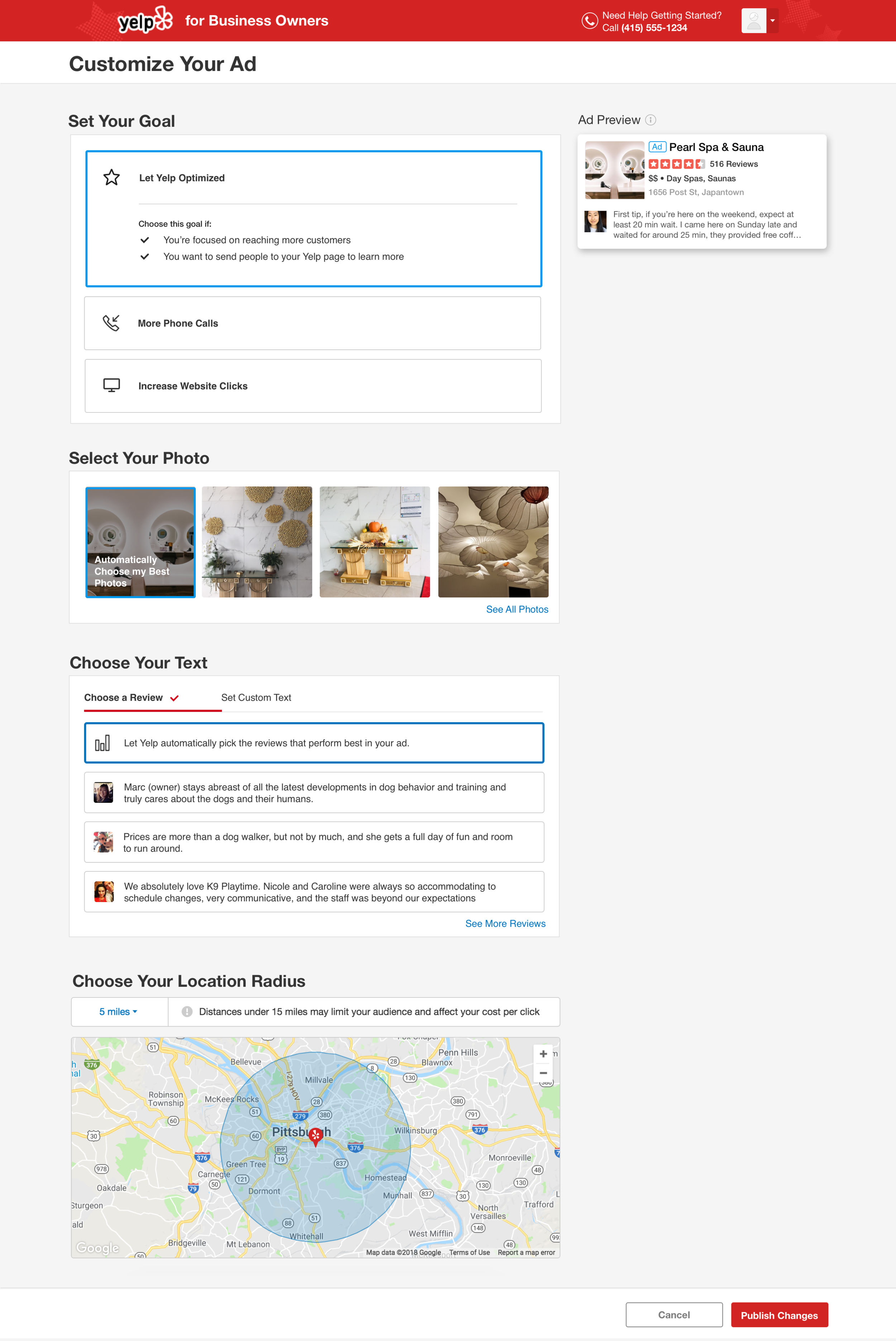
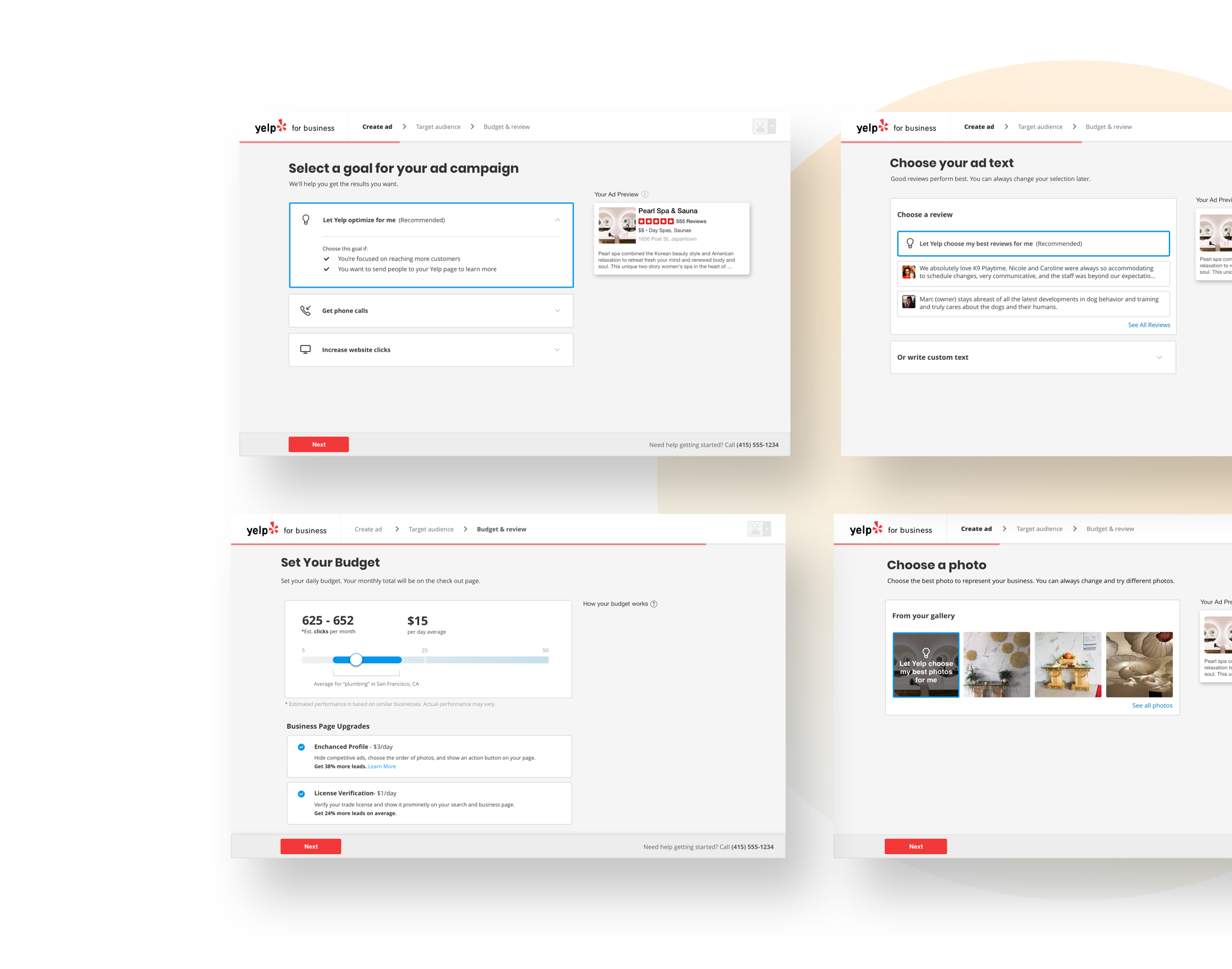
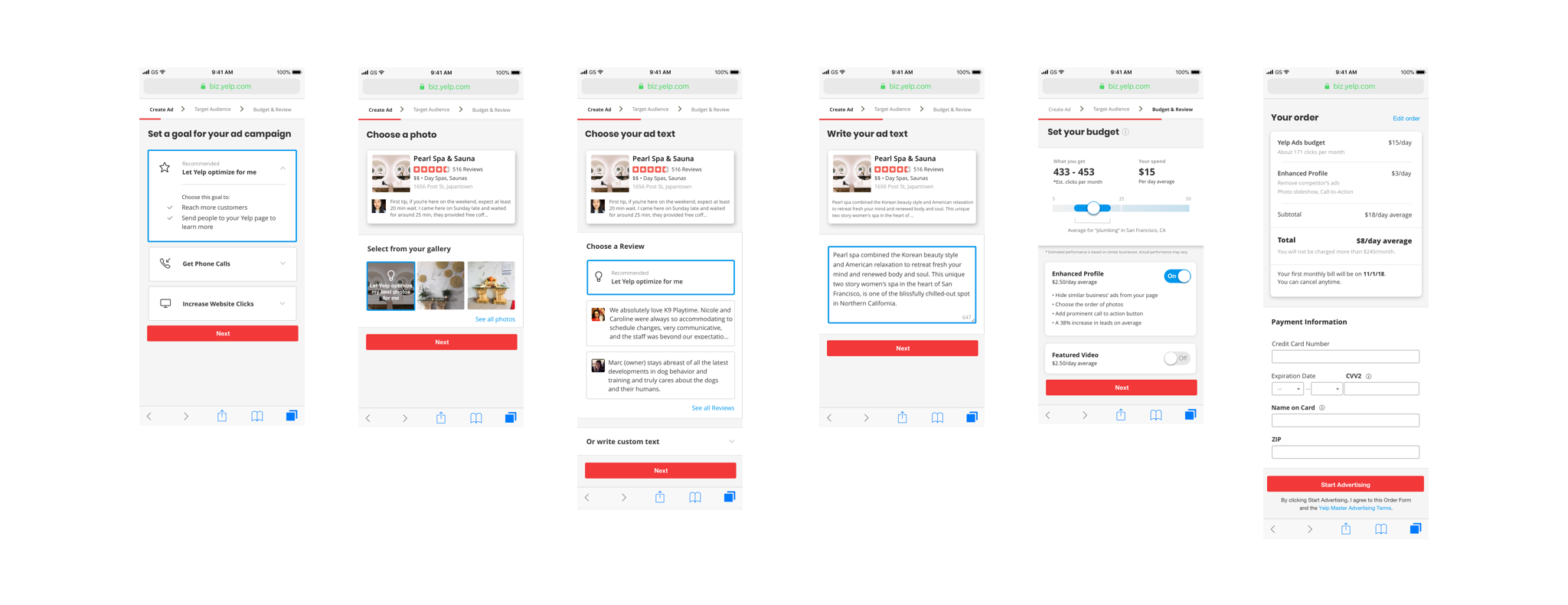
For this experiment, we decided to focus on introducing three features:
• Select ad objective (Targeting)
• Select photo (Creative)
• Select review (Creative)
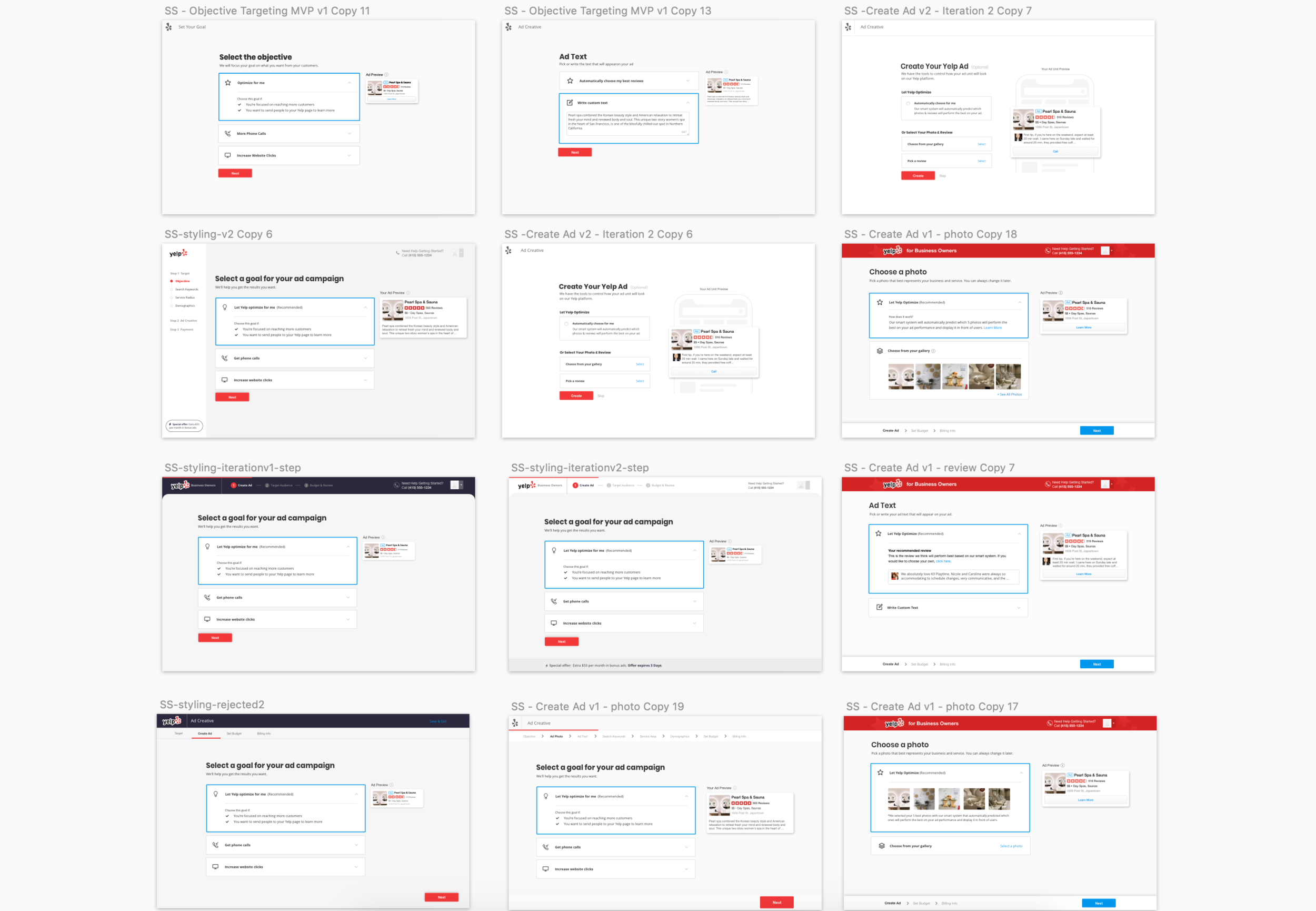
Our goal was to establish a consistent and scalable design template for our pages, prioritizing the content and the call-to-action. To achieve this, we simplified the color scheme, layout, and content to enhance readability and clarity. Working collaboratively with our engineers, we implemented a design system as they transitioned their code to React.
This is currently an on-going project until end of year.
Our next steps includes:
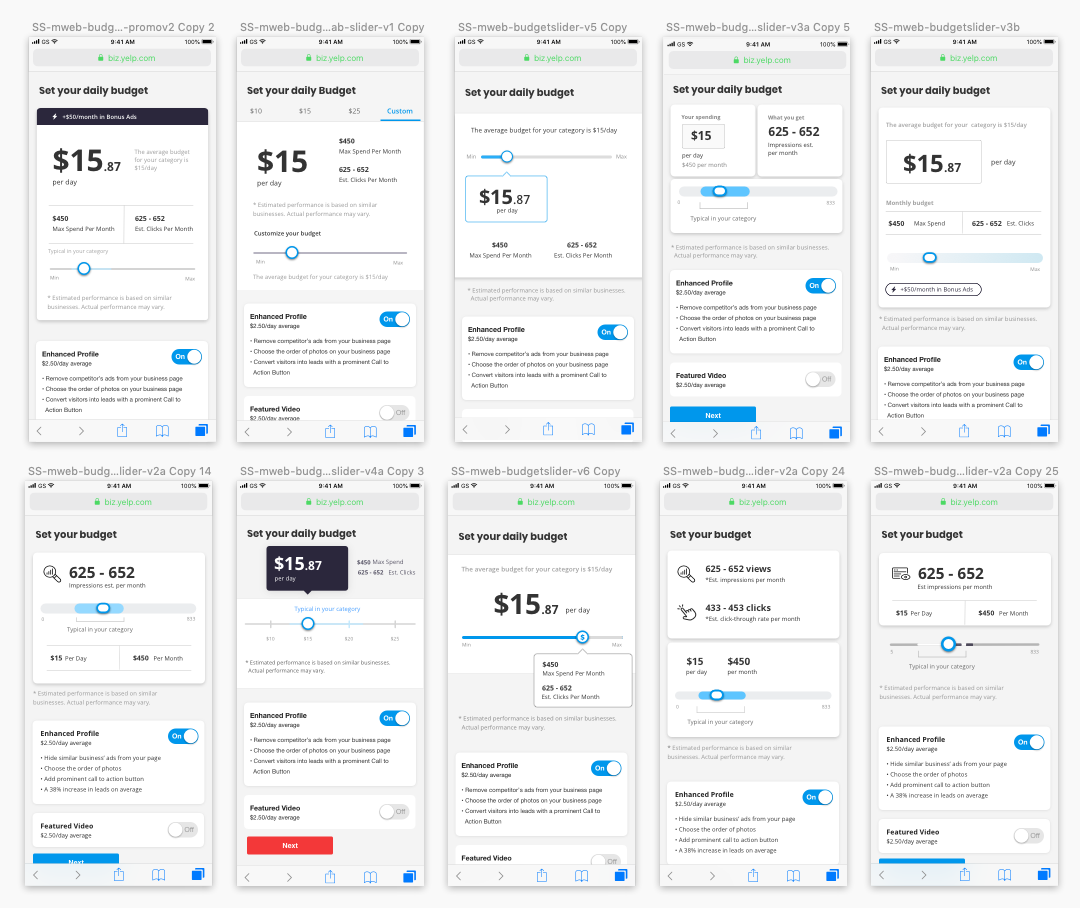
- integrating more targeting features, like search keywords, service area targeting, demographics
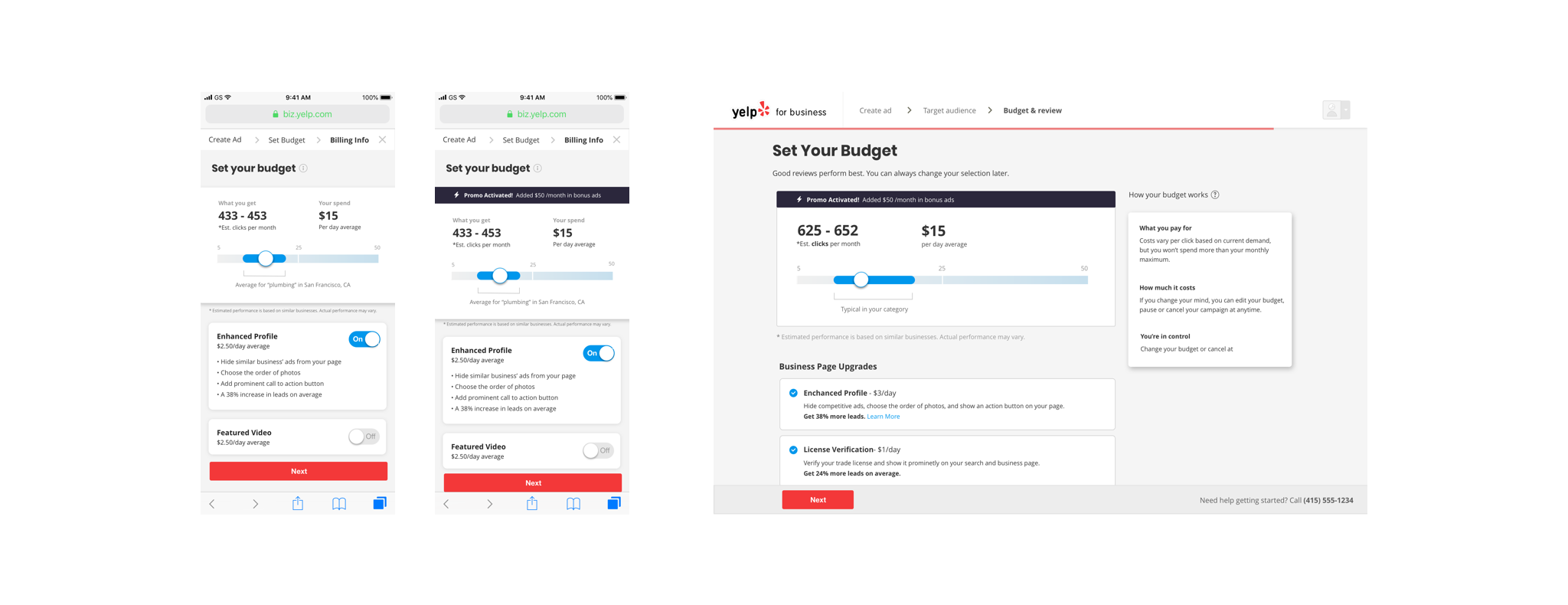
- iterate on the budget page and allow a “max-bid” for CPC feature
- improve ux through usability testing
Results & Next Steps
Other features within customize ad & self-serve